Excavations at Cedar Grove Site
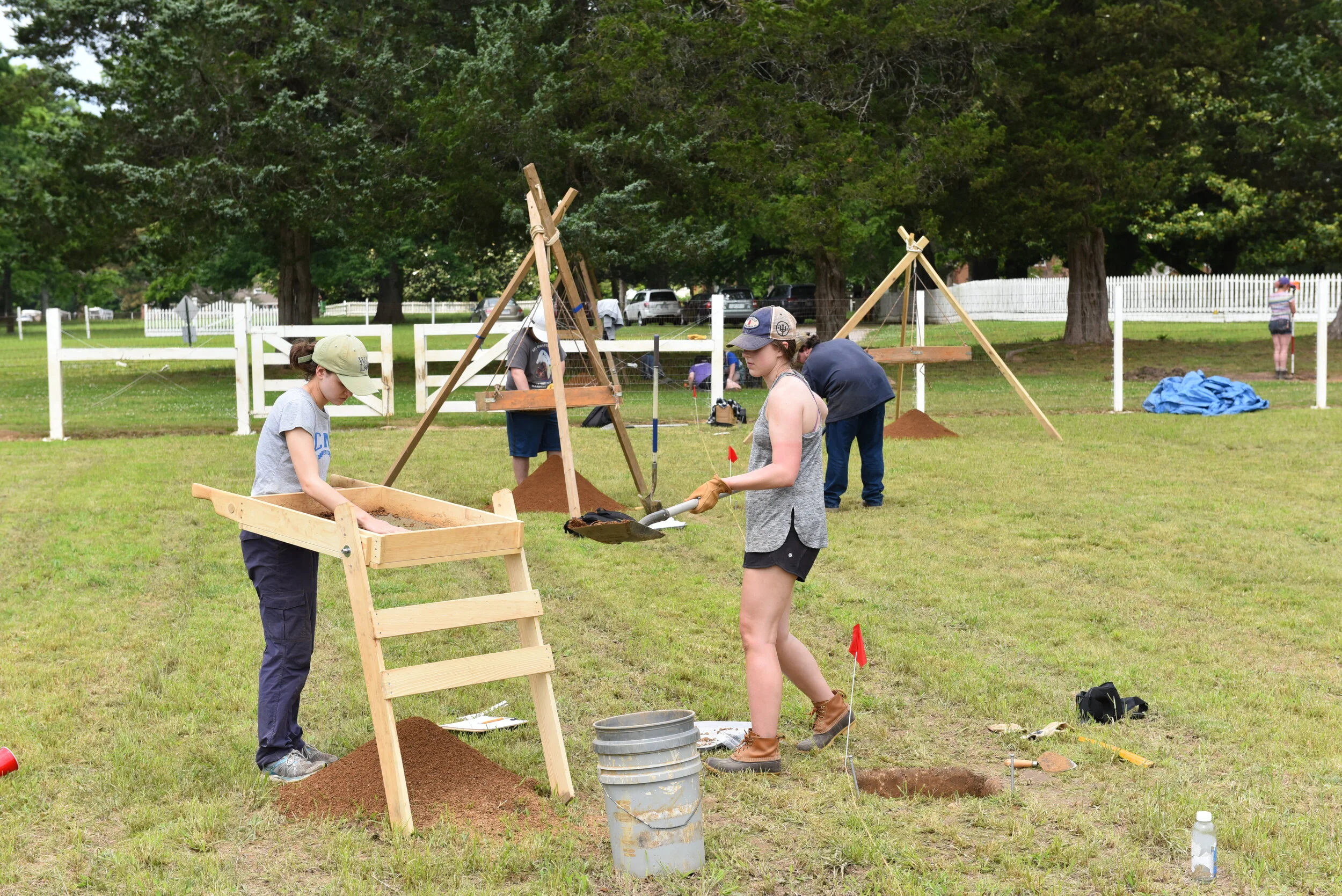
We began work on this early 19th century site during the 2019 field season.
History of the Cedar Grove Site:
The history of the Cedar Grove Plantation site began in December 1824 when Micajah Moorman purchased 1,971 acres in Fayette County, TN. After his death, the land came under the ownership of his son-in-law, John W. Jones. By 1850, Jones had expanded the plantation to over 5,509 acres and had acquired 240 enslaved African Americans (United States Census, 1850). A 1863 historic map created by Union army soldiers during the Civil War reveals the location of some of the houses of the enslaved individuals nearby the Jones’ manor house (Map of the Country North of Grand Junction, Tenn, 1862).
Our Work at the Cedar Grove Site
2019 Field Season:
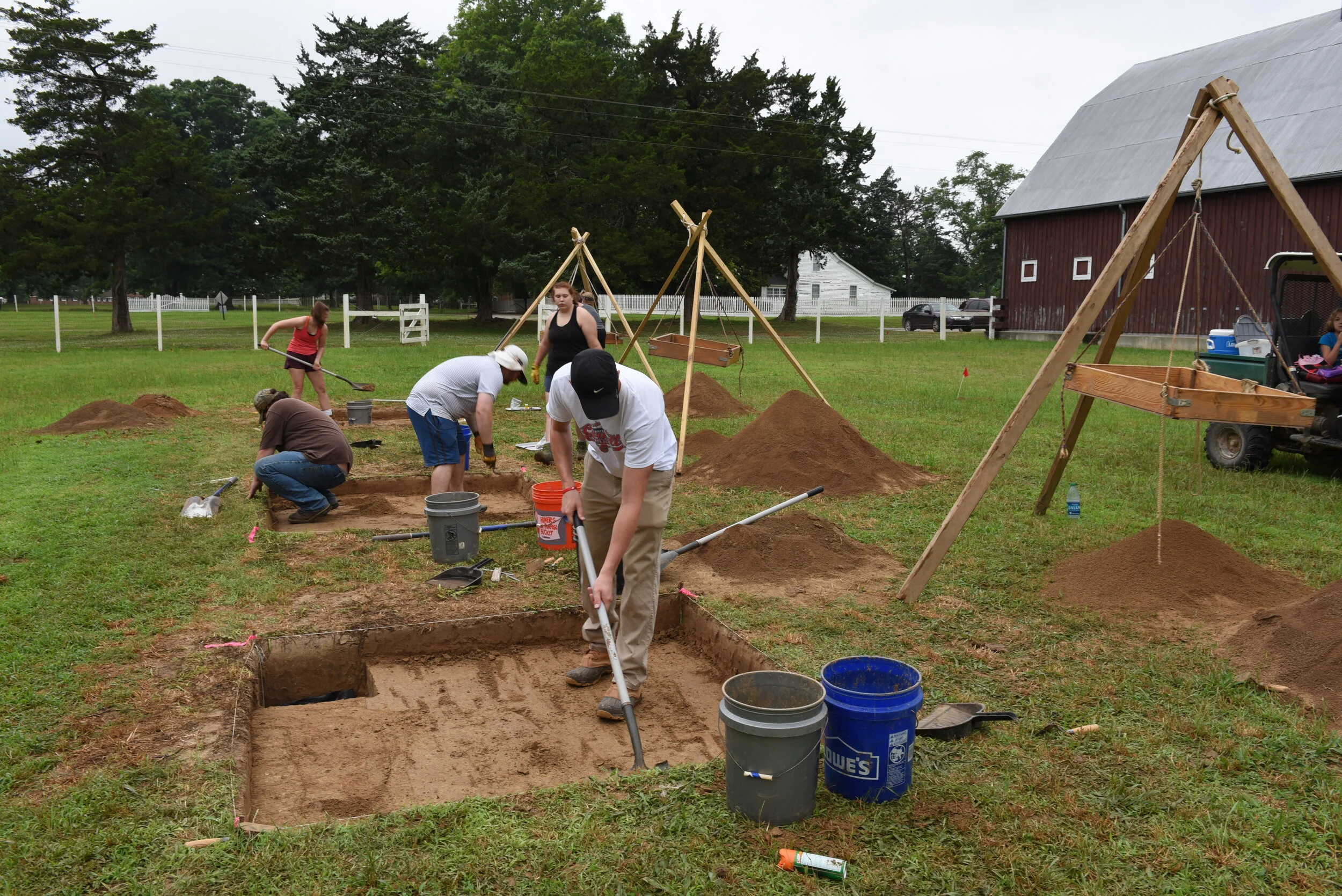
In 2019, Dr. Andrew Mickelson (U. of Memphis) conducted a magnetometry survey in the area which revealed high levels of metallic material indicating the presence of a historic mid-19th century site. During our 2019 field season, we began excavations and a series of STPs were surveyed and excavated in a grid-like fashion. In an area of 260 meters by 80 meters, we positioned 67 STPs every 10 meters. So far we have expanded three of these STPs into units. Throughout this process, we have discovered material culture pertaining to the lives of enslaved African Americans in their work, their foodways, and their daily lives. In the coming years, we hope to expand this site and discover more about the lives of the individuals who were once enslaved here. Check out picture from the 2019 season here.
2021 Field Season:
During the 2021 field season, Rhodes students excavated 18 new units, each a one meter square. These units were opened on the same grid as the STPs from 2019, trying to get an overall view of the area where the enslaved houses probably were. Within these units, we found a large variety of material culture, including nails, brick fragments, decorated ceramics, metal farming tools, and personal items. There are also soil stains that are indicative of house structures and may represent the edge of a house. In the future, we hope to include dendrochronology data to better understand the climate and weather patterns from when these houses were inhabited and to further analyze the material culture to better understand the lives of those enslaved here.
Our Publications on the Cedar Grove Site:

“Beads of Bondage: Global Displacement and Cultural Connections in Western Tennessee” was presented virtually at the 2021 Society for Historical Archaeology Conference.
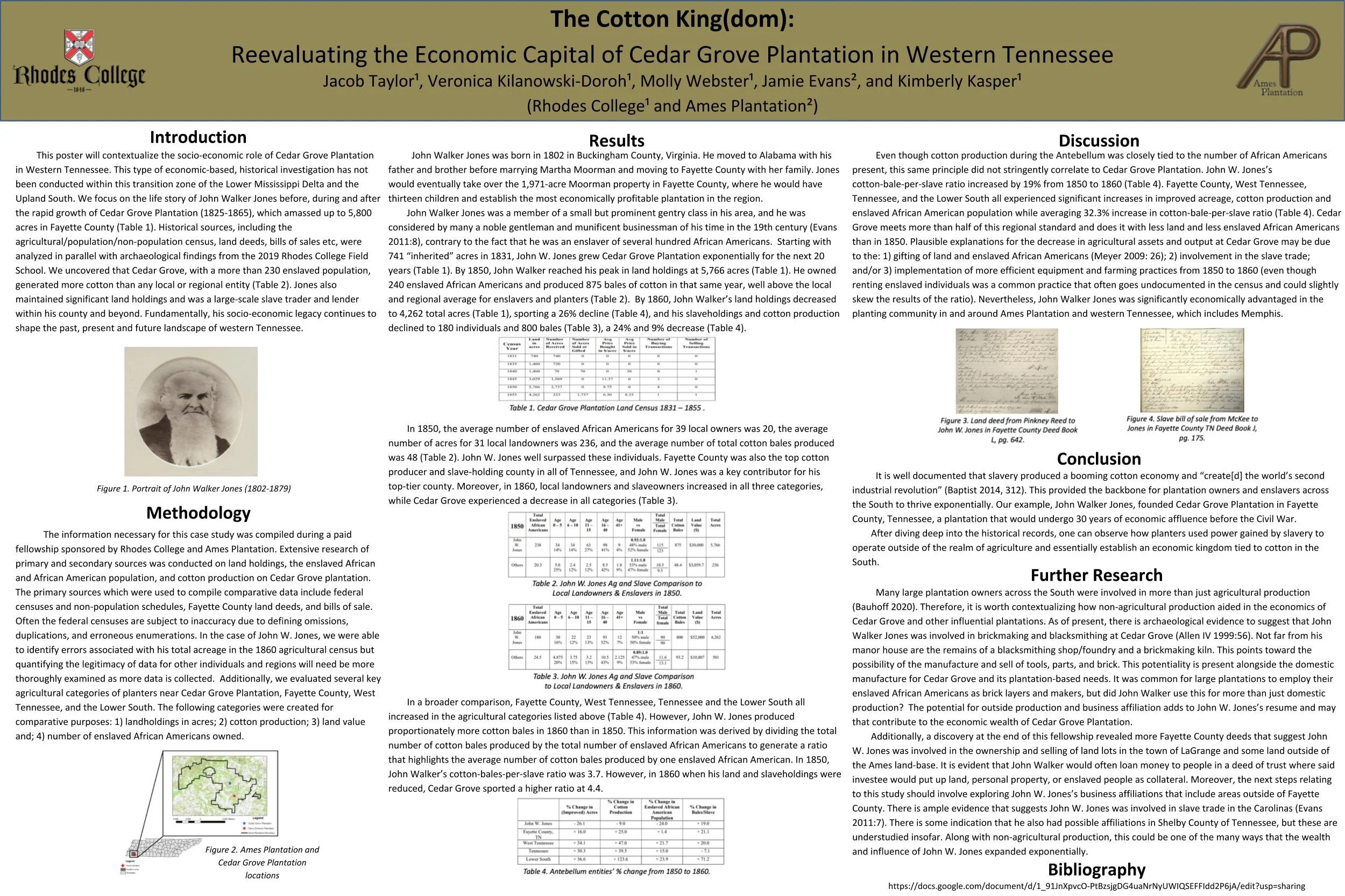
“The Cotton King(dom): Reevaluating the Economic Capital of Cedar Grove Plantation in Western Tennessee” was presented virtually at the 2021 Society for Historical Archaeology Conference.
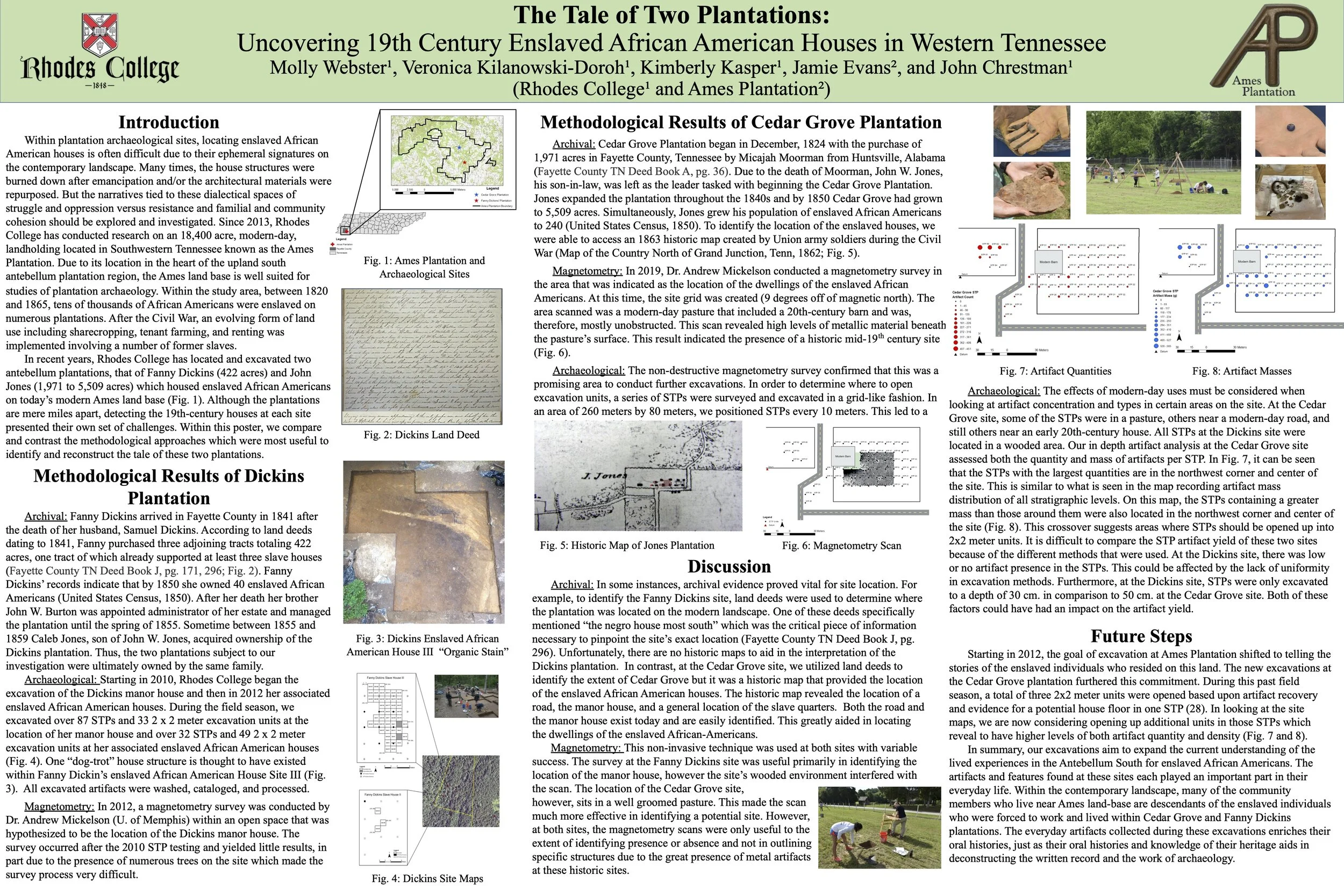
“The Tale of Two Plantations: Uncovering 19th Century Enslaved African Americans Houses in Western Tennessee” was presented at the 2020 Society for Historical Archaeology Conference in Boston, MA.