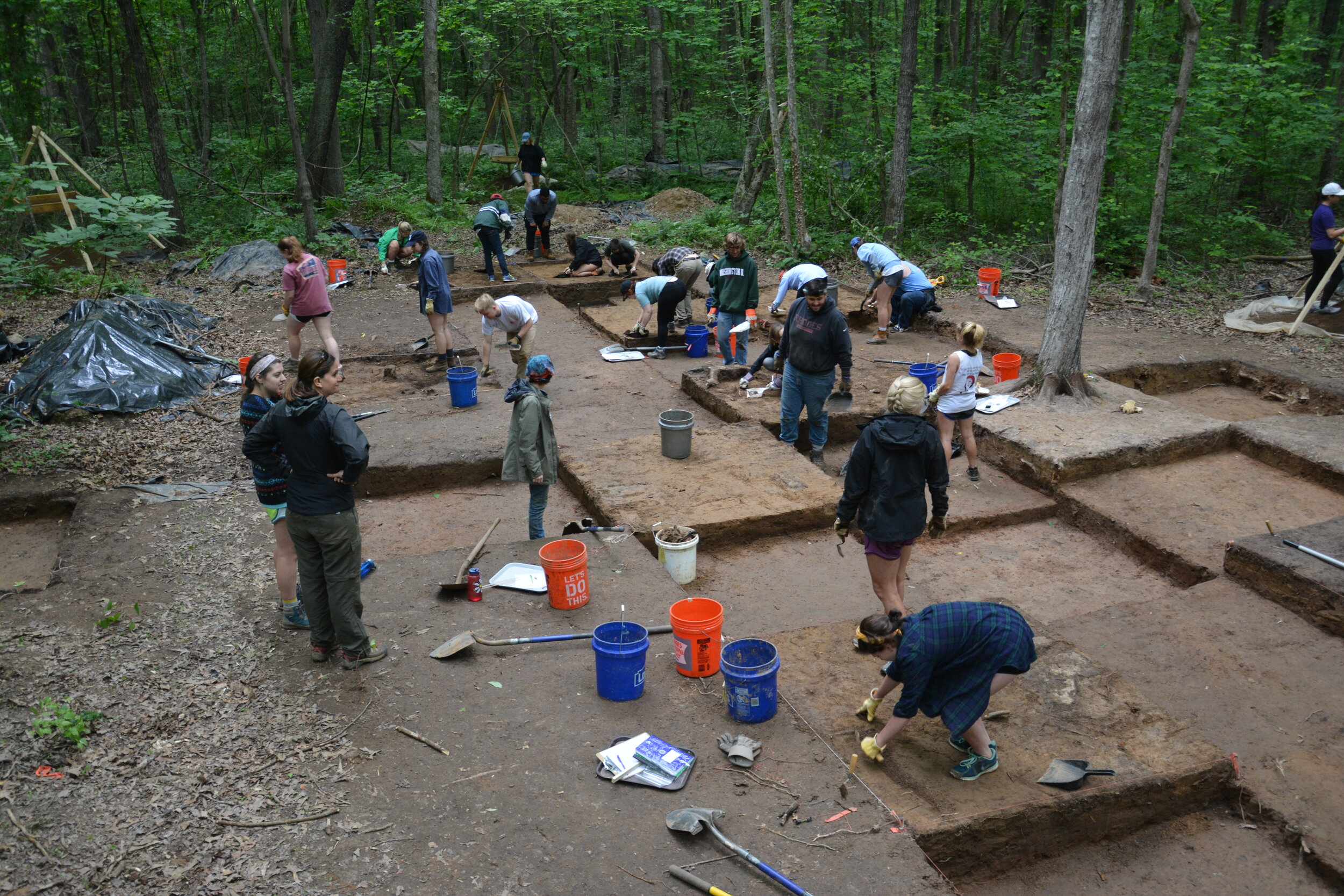
Excavations at the Fanny Dickins Plantation
We began work on this early 19th century site during the 2012 field season.
History of the Site
Fanny Dickins arrived in Fayette County in 1841 after the death of her husband, Samuel Dickins. According to land deeds dating to 1841, Fanny purchased three adjoining tracts totaling 422 acres, one tract of which already supported at least three slave houses (Fayette County TN Deed Book J, pg. 171, 296). By 1850, Dickins owned 40 enslaved African Americans (United States Census, 1850). After her death, Dickins’ brother John W. Burton was appointed administrator of her estate and managed the plantation until the spring of 1855. Sometime between 1855 and 1859 Caleb Jones, son of John W. Jones, acquired ownership of the Dickins plantation. Thus, the two plantations subject to our investigation were ultimately owned by the same family.

Our work on Fanny Dickins’ land:
Starting in 2010, Rhodes College began the excavation of the Dickins manor house, and then in 2012 her associated enslaved African American houses. During the subsequent field seasons, we excavated over 87 shovel test pit units (STPs) and 33 2x2 meter excavation units at the location of her manor house and over 32 STPs and 49 2x2 meter excavation units at her associated enslaved African American houses. We were able to identify the location of multiple enslaved African American houses, including a “dog-trot” house structure at Fanny Dickin’s enslaved African American House Site III. All excavated artifacts were washed, cataloged, and processed. In 2012, a magnetometry survey was conducted by Dr. Andrew Mickelson (U. of Memphis) within an open space that was hypothesized to be the location of the Dickins manor house. The survey occurred after the 2010 STP testing and yielded little results, in part due to the presence of numerous trees on the site which made the survey process very difficult.
Our Publications on the Fanny Dickins’ Site:
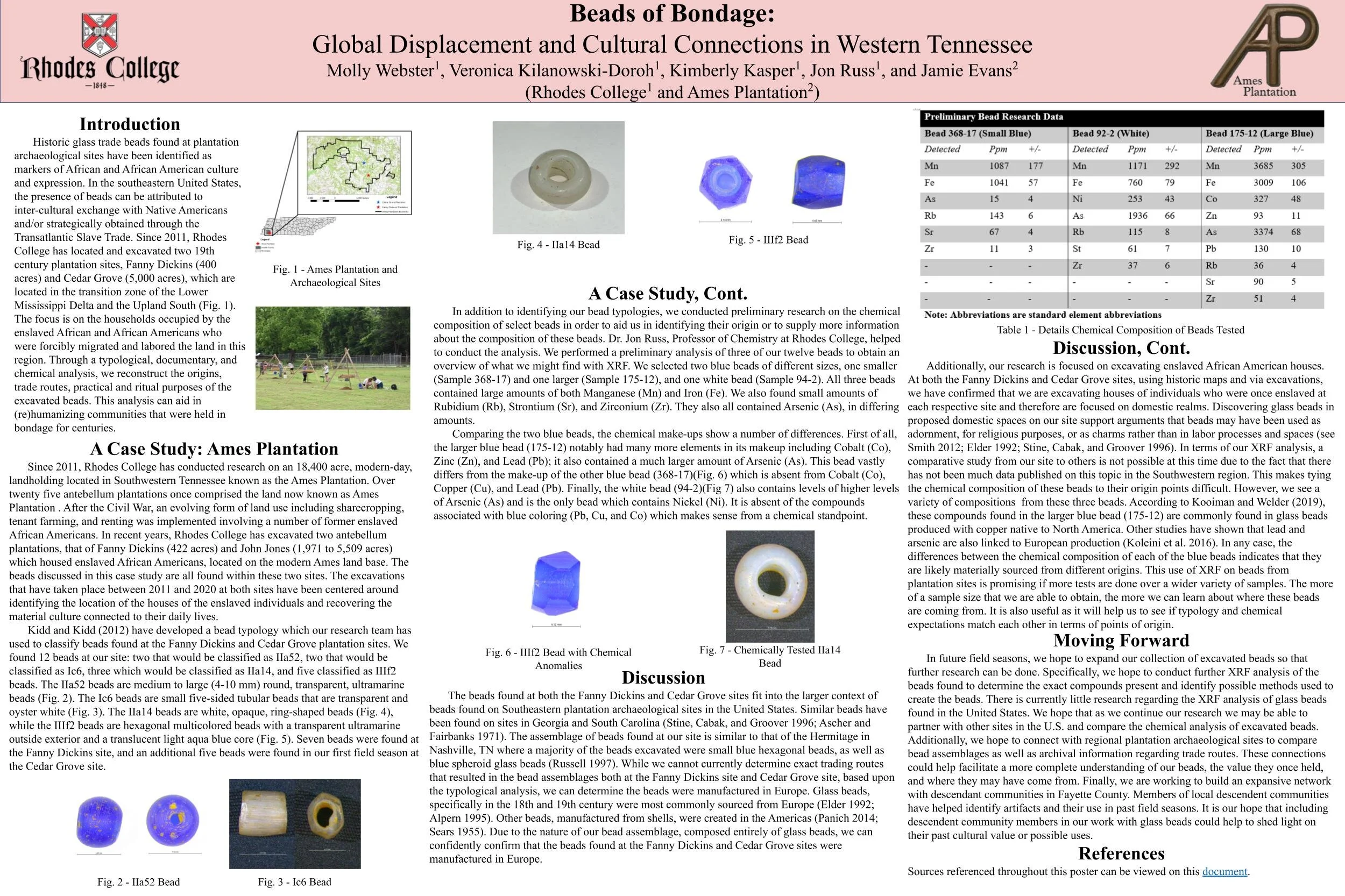
“Beads of Bondage: Global Displacement and Cultural Connections in Western Tennessee” was presented virtually at the 2021 Society for Historical Archaeology Conference.
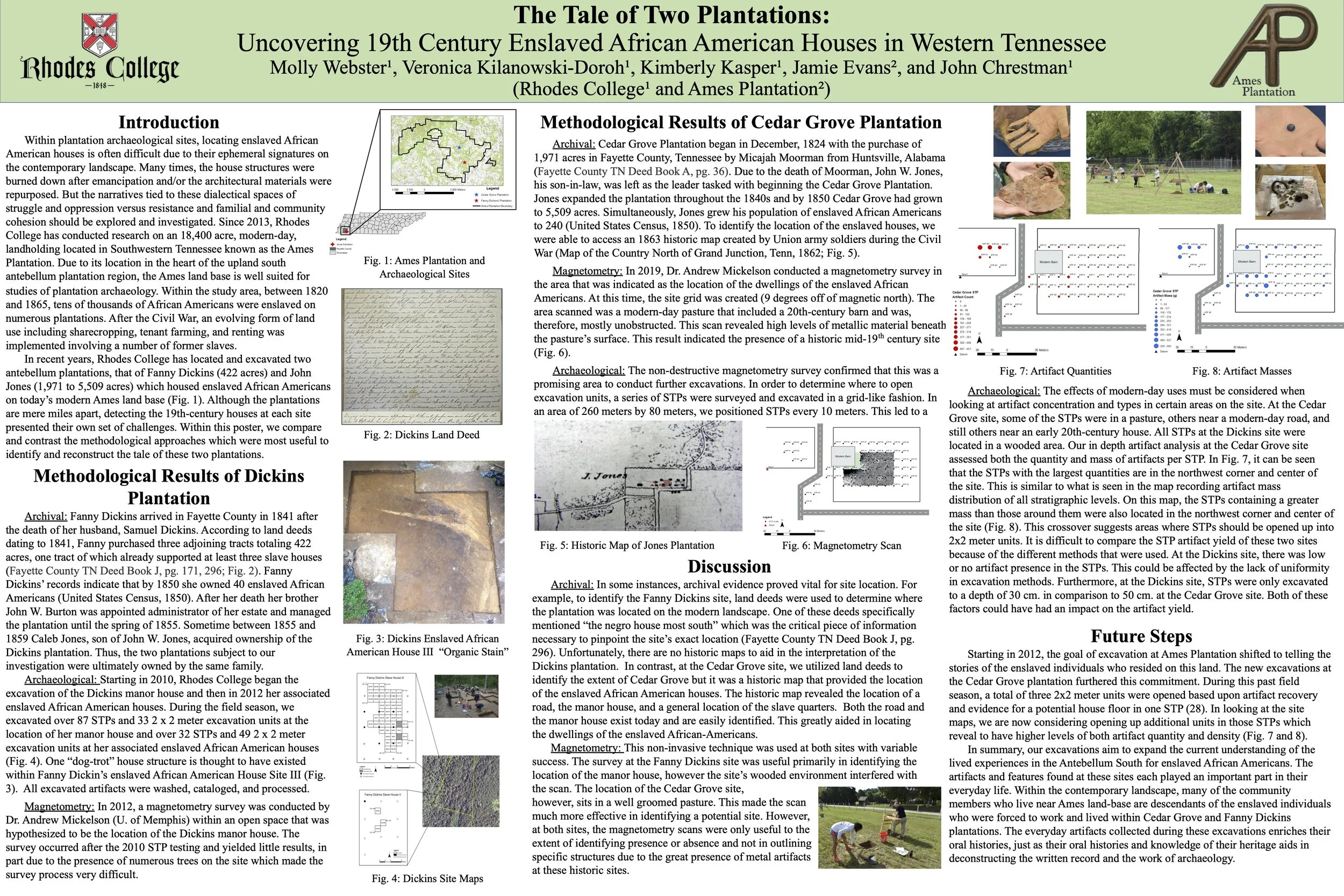
“The Tale of Two Plantations: Uncovering 19th Century Enslaved African American Houses in Western Tennessee” was presented at the 2020 Society for Historical Archaeology Conference in Boston, MA.
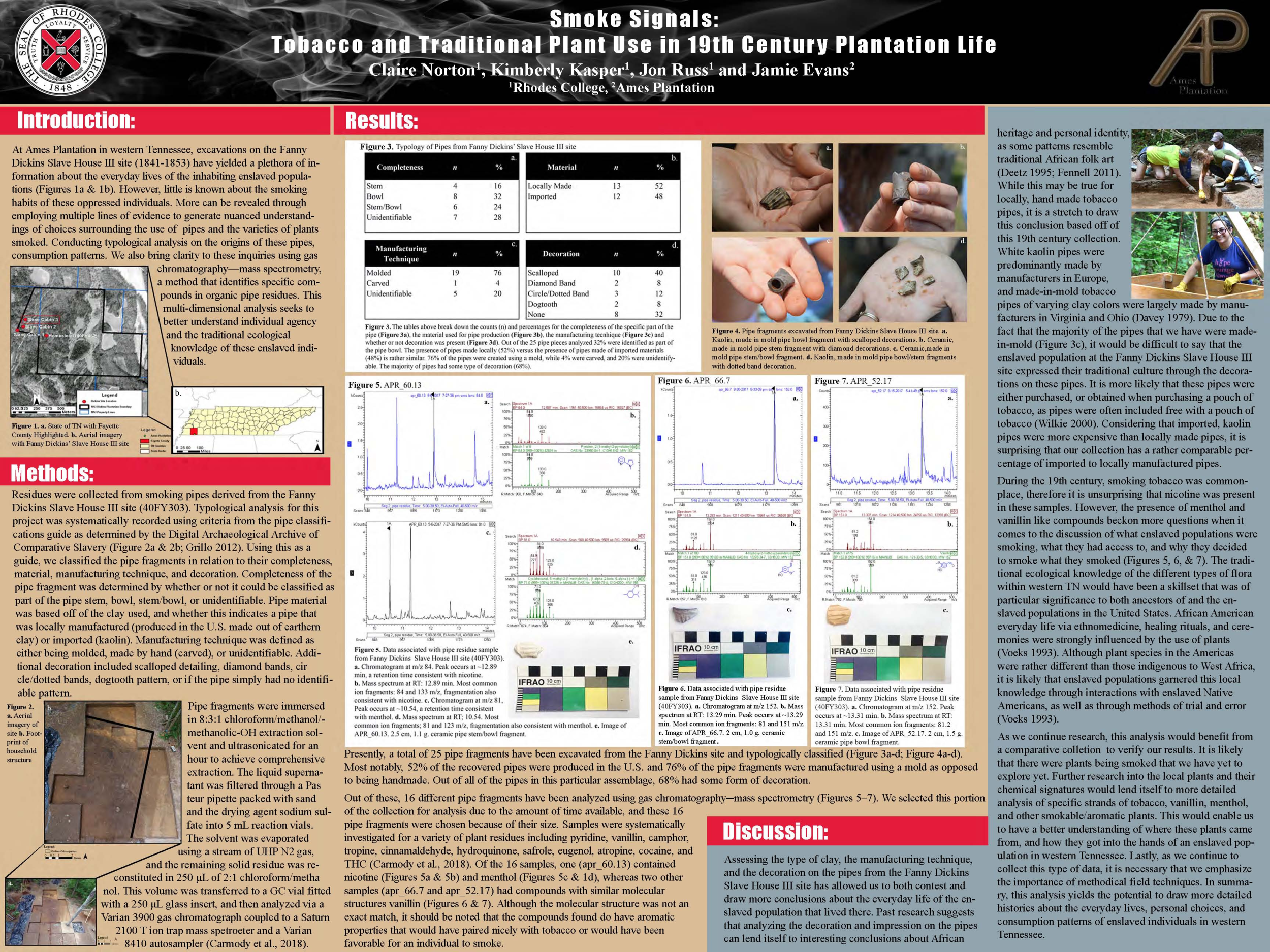
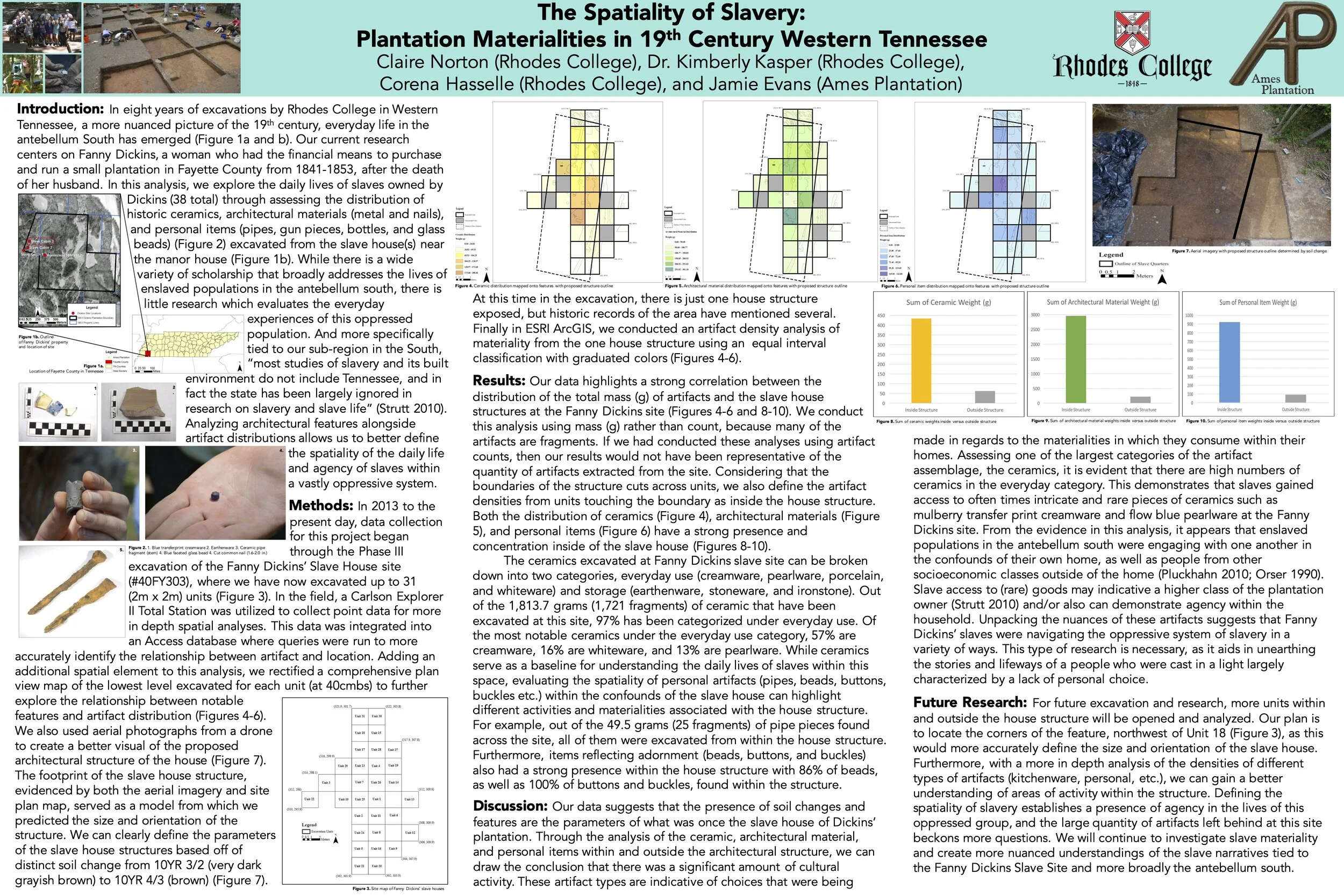
“The Spatiality of Slavery: Plantation Materialities in 19th Century Western Tennessee” was presented at the 2016 Society for Historical Archaeology Conference in Washington D.C.