Sustainably Serving Seniors Transcript
Sustainably Serving Seniors: Metropolitan Inter-Faith Association’s Intersectional Approach to Senior Hunger
Meg Corley: This podcast is part of the Rhodes College Just Food series, which addresses food inequality through discussion of production, access, distribution, and consumption in Memphis and beyond. In this semester-long project, students and community members have come together to promote empowerment through awareness and equity.
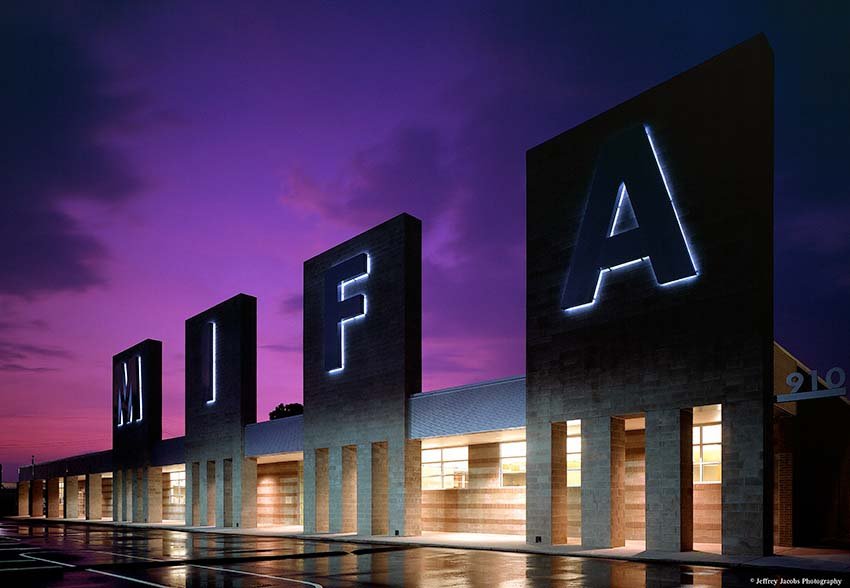
Liv Cohen: I’m Liv Cohen [and I’m Meg Corley]and today we are going to tell a story that exemplifies the intersections of food justice in Memphis. The story surrounds one of the oldest and most prolific food justice-oriented non-profits in Memphis, the Metropolitan Inter-Faith Association, widely known as MIFA, which directs most of its efforts toward combating senior hunger in Shelby County. According to the Aging Commission of the Mid-South, “Research shows that in 2019, 5.5 million seniors (nearly8% of the senior population) were food insecure. The current number of seniors who are food insecure has more than doubled since 2001. Senior food insecurity is at a rate of 17% in Memphis.” Shelby County experiences the highest rate of senior food insecurity in the nation. Through MIFA’s high-impact programs, their goal is to help every senior in Shelby County achieve food security.
Meg Corley: MIFA was founded in 1968 by religious and community leaders to mitigate the impacts of poverty and racial strife in Memphis. These leaders published “An Appeal to Conscience” in the Commercial Appeal. The letter called on the religious leadership of the city to work for progress on social justice, thus MIFA was established. Through their Meals on Wheels program, MIFA delivers over 800 hot meals every week to homebound, hungry, or impoverished seniors across Shelby County. In addition to Meals on Wheels, MIFA offers long-term care ombudsman advocates for seniors, emergency services for families facing housing crises such as rent, utility, or mortgage payments, emergency shelter placements for families, and a rapid rehousing program. They also have a 24-hour hotline for homeless families.
Liv Cohen: We had the opportunity to sit down with both the President of MIFA,Sally Heinz, and Volunteer Specialist Angela Scott, and to help with their food distribution service, Meals on Wheels. During these conversations, we touched on MIFA’s role in the food justice movement in Memphis, the sustainability and intersectionality of their programs, and their funding. We asked Sally to discuss MIFA’s mission, and here is what she had to say:
Sally Heinz: “MIFA’s mission is to support the independence of vulnerable seniors and families in crisis. We were committed to making sure that they were programs that made a real difference in people's lives. So it's sometimes easy to say you serve the community or you serve vulnerable people, but to really be committed to high quality, be committed to a continuous improvement project where we're looking at trends and results and outcomes and impacts, and that we're not just doing the same thing over and over again without evolving or making program changes when called upon.”
Liv Cohen: To achieve their mission, MIFA’s program expenses exceed $10 million dollars. During the Fiscal Year 2019-2020, they distributed over $4.6 million dollars to family emergency services and housing, and this is about 43 percent of their overall program costs. Another $4.2 million, which is 39 percent of their program costs, went to seniors through Meals on Wheels, the long-term care ombudsman program, and senior companion programs. Lastly, about $1.9 million went towards administrative expenses and fundraising, which consists of communications, development, and administration.
Sally Heinz: MIFA is interesting, I think, because we have a combination of government funding as well as individual funding. We have made a big effort in the past years to increase the percentage of private contributions when I say individual, I mean foundations congregation. All of that is private. So, if you look back over the years, you will see that that percentage of our support has been growing. We also, over the past 10 years, made a conscious effort to build our reserve funds so that we, we have a formula for wanting to have, I believe it's three months of operations, always on hand and reserves. So, in the horrible circumstance that the city of Memphis told us, we are no longer going to give you our support, we would have our reserves to call upon. So that was put in place to kind of even out any interruptions and funding. And then in 2017 or something, we did an endowment campaign to raise –the goal was $15 million –for a MIFA endowment that would eventually spin off if you, if we took five percent, $750 thousand dollars. The, the goal there was really, we wanted it to be a $20 million campaign because we wanted, thought it would be great if all of this sort of administrative utilities, those sort of functions could be covered by the endowment draw every year and everything else raised could go to programs. So that was sort of the direction.
Meg Corley: Before we met with Angela, we had the opportunity to help her with the Meals on Wheels distribution and experience the hand-off process to volunteer drivers. The dynamic of Angela and the other MIFA employees interacting with their fleet of volunteer drivers was inspiring. As we worked, we often found that Angela had lapped us. She would see the cars pulling up, recognize them almost immediately, and pull the food for their route outside before the cars had even stopped. Her relationship with the volunteers was unmatched. It’s evident that this passion and drive seeps into the communication between MIFA and their volunteers; through these deliveries, volunteers form an undeniable bond with the seniors they get to visit on a weekly basis on their meal delivery routes. Angela spoke with us about the program’s impact on everyone involved.
Angela Scott: Oh, well, providing that, that daily meal to a senior who may not have anyone there to check on them. They may have, um, a beautiful home, may have a car that's sitting in the driveway that they may not be able to drive, but they can't prepare food for themselves. So just to be able to get a meal to those who need it and also that face-to-face contact, even if it's like a couple, a couple of seconds, "How are you doing Ms. Mary? How's your day? You know, you never know how just that, you know, few seconds or few minutes will impact the person's life and they'll know there's someone here, "
Meg Corley: Angela told us a story about a married couple who were long term volunteers with Meals on Wheels and delivered to a woman for so long that they considered each other family. The couple would sit with the nearly 100-year-old woman and share a meal every time they checked in on her. Angela told us that they took each other to their churches and attended birthday parties and family functions for each other. She added that the couple was white, and the woman was Black, but that didn't matter because “they called each other family.”
Liv Cohen: Along with their substantial and impressive Meals on Wheel program, MIFA attends to various other issues at hand that residents of Shelby County face both in and outside of the food system. As we discussed earlier in this episode, MIFA has a multitude of programs for seniors and families in crisis in the city. Sally discussed MIFA's multi-dimensional approach to food justice with us, and it’s important to note that food justice is a deeply intersectional movement.
Sally Heinz: Well, you know, obviously food justice is more than what we do. I mean, there are way more opportunities and issues than MIFA is directly impacting. And, in our case, for our senior clients, you know, Memphis has the dubious distinction of having the highest rate of food insecurity for seniors of any large metropolitan city. So, we are really focused on that, and it would like to be able to say in as quickly as possible that no homebound senior in Memphis goes hungry. So, in terms of our seniors, that's what it looks like for MIFA. Families, you know, we –before the pandemic –were obviously doing a lot more in terms of food pantries and referring families to, to food pantries in their neighborhoods when they came to us. I'm not sure that that is back up to full operation at this point because so many of the pantries were volunteer-run and they closed. Really grateful for the Mid-South Foodbank because I think they've done a remarkable job in having, getting food to people, and moving around to different locations to try to make that possible. But, you know, food justice for our community obviously also includes, you know, access to quality food and neighborhoods where there may not be at this point, even other things like transportation impacts food justice. So, you all are probably more of the experts on the issue really than, than I am. But you know, it's going to take collaboration and work of more than MIFA to really change the course in Memphis.
Liv Cohen: Sally also talked about her personal connection with the work that MIFA does. According to MIFA’s website, she grew up in Midtown, went to Evergreen Presbyterian Church, attended Snowden School, Central High, and graduated with the class of 1981 at Rhodes College. She has always had a connection with MIFA, as well, with her uncle, Dr. Paul Tudor Jones, being the founder of MIFA. Through her own experiences growing up in Memphis and her relationship with her parents, she found a passion for serving seniors in Shelby County.
Sally Heinz: I was also beginning to care or to see the impact of aging on my parents and sort of what was going to be ahead in their lives and an opportunity came up to come to MIFA. And I think because of being at that point in my life where I was beginning to see some of the things that seniors or older people face, MIFA seemed very meaningful to me.
Meg Corley: The impact of MIFA’s work is undeniable. Meals on Wheels alone serves over 800 seniors in the Memphis community through both volunteer and paid employee delivery routes. Sally spoke to the other kinds of benefits the program has. When looking at food justice through the lens of intersectionality, there are various factors that go into one’s health due to their food access. One’s consumption and overall food accessibility results in determinants of their health and well-being, as Sally discussed with us.
Sally Heinz: Um, you know, we have always believed that it is more than just a meal, but in it it really is. I mean, we don't just believe that and back to that high impact, four or five years ago, when we had some grant support from the Plough foundation, we tried some innovative things and our Meals on Wheels program. And one of them was to take seniors who were being dismissed from Methodist, a stay at Methodist Hospital and immediately deliver meals to them when they got home. So they went, underwent an assessment by a geriatric nurse at the hospital, who would then make the recommendation that this, yes, this patient could really benefit from having meal delivery. They don't have access to food or difficulty in other situations. And what was great was that after a couple of years, the Methodist data, people were able to look at those patients and see what their hospital utilization was before getting meals and after getting meals. And there was a, I think it was over 70 percent or something reduction in hospital encounters for those patients. So that's a clear indication that it is, is more than a meal. Also, as part of that program, we did some other research on clients and there is something known as a loneliness score. I'm not quite sure how that works, but the, the, showed that over time, the loneliness score for those seniors receiving meals went down. And isolation is, is one of those social determinants of health that can be just as important as nutrition. So, we're glad to see that too.
Meg Corley: As our conversations with Sally and Angela came to a close, we asked them to tell us their visions for the future of MIFA; both realistically and in a dream world.
Angela Scott: Well, right now, so as I go out to deliver and I notice that there are some people who have family members living with them, so they're not in isolation. So the ones, I would like to see, those maybe get that once a week delivery so that we can pick up those, fill those other slots with someone who doesn't have, you know, someone in the home with them, who doesn't have a microwave, because there's some and it's 2021, you'd have a microwave, but there are some who don't have a microwave where they can't heat up those things. So,I would like to see that we balance that, and we can save fuel costs and you know, admin costs, if we can just tweak it just a little bit. You know, the ones who can get the once a week. The ones who are in isolation, maybe when we go out to do the assessment, we can just really, you know, hone in on those questions to make sure we have the correct information, so we won't be, you know, spinning our wheels and we'll be able to use our finances wisely. You know, there are other programs out there and I'm seeing, I saw a billboard the other day advertised for like seven meals. They put a cost associated with it. Everyone you know, there are some who, their diets, even with our diet, our meal menu, people still can't eat it. So, if we have more choices for them, even I know some of the meals on this program, they allow the client to actually choose because everybody don't like chicken, we have, "I'm tired of chicken," or people, you know, are vegetarian so if we can offer, or they want fish. So, the choices that they have, the ability to choose and just offer more choices, limit the days that we deliver to those who are not in isolation. Um, let's see. And if we can offer more, because again, there are people who don't like, who are only receiving this meal from MIFA. And even if it's at the end of the month, beginning of the month, this is the only meal that you have. You know, what are you doing the other morning and evening? And like me, you want a snack, so if we can increase it, the ones who get, you know, get a breakfast or maybe a snack or even dinner. I think that will be ideal. And also load them up on those fresh fruits and vegetables because we know how important that is to, you know, our diets. Uh, let's see. And again, if we, we used to have a handyman program, so if we had more funds to be able to meet more of the needs, not just the nutrition needs, but you know, if our senior's roof is leaking and there's mold, if we see mold, we can act on it or we have someone who can go out there and fix this because we know that's affecting their health as well, just different things like that.
Sally Heinz: Yes. Well, as I said, we really do have an aspirational goal that we would like every homebound senior who could benefit from that hand-delivered meal to get that. Aspirationally, it would be even greater if maybe they're getting two meals a day or if they're getting meals that cover weekends because we obviously right now do five. So, we are committed to getting every senior who needs that home delivery as soon as we can. But aspirationally, what else could we let, you know? Could it be more meals? What else could we layer in, in terms of connecting those, those clients to other services that could be beneficial? So, it's really hard sometimes for that client to know even where to call or what to do. So, if we could have a caseworker here or a care navigator who can really be, you know, keeping up with those clients and making sure that they're getting the other resources they need, that would be great. For, for families, you know, in that case, it would be great just to go out of business aspirationally. You know what, if the systemic things that we have seen or just if people did get a living wage, what, what if all that happened, and we didn't have to be about giving utility? And rent assistance, but until that, you know, that would be the, the dream, perhaps. But until then, we definitely don't want a family to ever spend the night on the street. We want a family to be in, in shelter or even better, in an apartment of their choosing and getting assistance from us for those months, rent and connected to employment opportunities and ways that they can really make their lives better.
Liv Cohen: Through this episode of the Rhodes College Just Food series, we hope it is evident that MIFA is making major strides in the realm of food justice in Memphis, especially in terms of access and distribution. They are making a notable difference in the lives of seniors and families affected by the plague of food insecurity and housing inequities that affect our city and our residents. It is evident that food justice is a truly intersectional issue, and MIFA’s work zeroes in on this aspect of our food system through their multi-program approach to civil engagement and assistance. Lastly, we would like to thank Sally Heinz and Angela Scott for taking their time to speak with us and give us a glimpse into the influential work that MIFA has done for Memphis over the decades.