Connecting Food Farmers and Memphis Folks Transcript
Connecting Food Farmers and Memphis Folks
Annalise Riekerk: This podcast is part of the Rhodes College Just Food series, which addresses food inequality through discussion of production, access, distribution, and consumption in Memphis and beyond. In this semester-long project, students and community members have come together to promote empowerment through awareness and equity. My name is Annalise Riekerk
Kathleen Cutting: My name is Kathleen Cutting
Oliver Hurst: And my name is Oliver Hurst. We will be hosting this episode of “Connecting Food Farmers and Memphis Folks”
Annalise Riekerk: In May 2021 Professor Kasper at Rhodes college introduced me to Mia Madison, the executive Director of Memphis Tilth, to work on starting the second season of the Chelsea Avenue Farmers Market, one of the many initiatives Memphis Tilth is heading. The market is located next to the St. James garden, a garden Memphis Tilth is working to cultivate access to local affordable food, as well as education through community collaboration. We held the market on Saturday mornings from 9 am to 12 pm selling a variety of produce, fruit, and dry goods all sourced from local Memphis farmers. The last market of the season was on the 30th of October where Kathleen and Oliver joined me to enjoy the fall festivities and to learn more about what is going on at the market.
Kathleen Cutting: Oliver and I arrived at the market on a cold Saturday morning. There was a stand set up with various local food products such as apples, swiss chard, and tomatoes. The stand was decorated with various Halloween decorations and there were fun treats and activities around. This seemingly idyllic rural scene was juxtaposed by the noise of the street as the Chelsea Avenue Farmers market is located on the corner of Chelsea Avenue and Springdale Street. While we were all there Annalise helped tend to customers, while Oliver and I observed and played corn hole. At the end of the market, Oliver and I helped take down the stand with Mia Madison, Jeanette Gil, Corie Walker, and other volunteers.
*Ambient noise at fall fest*
Oliver Hurst: Since coming to Rhodes, classes have broadened our understanding of food and its accessibility. Memphis as a city struggles with problems relating to Food Justice. In 2019 a Guardian documentary went so far as to call Memphis “America’s hunger capital.” According to Feeding America, a national Food Justice organization, in 2019 there were 115,980 food insecure people in Shelby County, where Memphis is located. Due to the effects of Covid-19, this number can be expected to have increased since then. These statistics offer a glimpse into the problems surrounding food insecurity in Memphis, but, when thinking about the entire food system of Memphis, we must also consider how the food is grown and transported to Memphis consumers.
Kathleen Cutting:The food justice platform, Regeneration, defines food apartheid as “A system of segregation that divides those with access to an abundance of nutritious food and those who have been denied that access due to systematic injustices” (Regeneration). With over 33% of Memphians living more than a mile from a supermarket and not owning a car it creates inadequate access to fresh food that is a pervasive issue in Memphis and throughout the South. This issue with access translates to 21% of the Shelby County residents lacking access to nutritious food (Memphis Flyer). Unfortunately, this issue is not getting any better, recently Kroger closed stores in both South Memphis and Orange mound. Following these closures, Rhonnie Brewer completed a grocery store visibility study funded by the Memphis City Government. She found that grocery stores would have to be creative and need the drive to work and be economically flexible with the community for them to put stores in these areas. This may be difficult as companies prioritize profit (Memphis Flyer). Individual action and organizations supporting this can become very important in these instances.Edible Memphis highlighted Takellah Rivera’s story offinding Memphis Tilth’s Urban Agriculture academy during the pandemic. When grocery stores became scary, jobs became unstable, and subscription services were overused and bogged down, Rivera found the Memphis Tilth Agriculture Academy. The academy is a “five-week certification course that aims to help people gain practical skills and expertise in urban farming and sustainable agriculture” (Edible Memphis). She learned about farming practices and food system failings and walked away from the program and started her own indoor and hydroponic garden at home (Edible Memphis).In this episode we will be focusing on Memphis Tilth, a non-profit organization that serves local farmers and Memphis community members through their Bring It Food Hub, Bring It Fresh, various gardens, the Chelsea Avenue Farmer’s Market, Farmer Needs Assessment Survey, Urban Agriculture Academy, and fellowships.
Annalise Riekerk: We first spoke with Mia Madison, the executive Director of Memphis Tilth to learn about what work is happening within the organization that increases food access and promotes environmentally sustainable farming initiatives. Mia is a native Memphian, graduating from Wooddale High School and then the University of Memphis with a Bachelor’s degree in Geography and aMaster’s degree in Anthropology. Since then, she has worked with multiple organizations around Memphis including the City of Memphis Division of Housing and Development, the Community Foundation, and the US Census Bureau. In all of these vastly different roles, Mia has always been focused on the people and social justice needs in and around
Memphis. In 2019, she started in her current role as Executive Director of Memphis Tilth. We asked Mia to explain the goals of Memphis Tilth.
Mia Madison: So, the goals of the organization are truly, to lead agricultural initiatives that create a more sustainable local food system. And we do that within one hundred and fifty miles of Memphis. We work with farmers, we work with growers, we work with food entrepreneurs. We want a number of people to be able to engage in the local food system that may look like... I'm so distracted.
Annalise Riekerk: We tried to pick a quiet spot, I thought that wouldn't be so noisy and then this is like a traffic stop.
Mia Madison: So, I think this is really just indicative of community, right? So it's, we're in community here that that person that just walked through was an Advance Memphis employee. People from the staff, you know, they come in and now you never know when you're needed around here. And so it's collective action. Our vision is to cultivate collective action for an economically sustainable, socially equitable, environmentally sound, local food system. And like I say, it's within hundred and fifty miles of Memphis. We aggregate food from farms. We distribute that to 15 different food access points throughout the Memphis area. We go to places where farmers need support like Piney Woods Mississippi or even to Tuskegee University. We travel around the region, McNairy County, Tipton county, engaging with farmers looking for ways to bring their products into the Memphis area.
Annalise Riekerk: As our class, Just Food, has demonstrated, Food Justice means many different things. Every person working under this movement likely has a different interpretation of what it means. Mia expanded on her personal view of Food Justice and what that means for Memphis Tilth.
Mia Madison: So food justice, so food justice really shows up in a lot of different ways at Memphis Tilth, food justice can look like community members approaching any of our growing spaces with a need for food. We try to supply community members with direct access to food in spaces that we're growing. It may look like harvesting on site. It could look like paying forward donation bags into community, and that's from food either that we've aggregated from our partner farms or food that we've grown on site. Food justice for Memphis Tilth is really important. Access to food and where community members are accessing that really is indicative as to who truly has access to local food, and Memphis Tilth. Memphis Tilth tries to be specific in providing that food access by having spaces like the Chelsea Avenue Farmer's Market, by looking at ways in which we bring it fresh, which is another program where we partner with neighborhoods who may have events or want to have pop up produce stays in their neighborhoods. Maybe they're not growing food there, but they don't have direct access to fresh produce, so we would love to come out to those communities, pop up a bring it or really just bring it fresh right at an affordable rate. We want farmers to know that they are valued in community. So we, while we do pay forward in community, we also look for ways that we can monetize farmer's products so that farmers feel that value, food justice kind of goes both ways. Where a community member is in need of food. A farmer is in need of that community member to need their food. So having a direct or being the bridge between the farmer and the consumer is where Memphis Tilth shows up for food justice.
Oliver Hurst:And then we asked Mia about the climate surrounding food justice in Memphis.
Mia Madison:And how Memphis really feels about that is that they, they don't demand a right to food. But the expectation is that churches and communities of faith are the only places where they can receive that food from, or places like the foodbank or pantries, right? Memphians really feel like those are the only spaces that they can receive a food that's available for direct access. Right? But there is a number of ways that food can make it to those community members. Growing your own food is really number one. And We Memphis Tilth would love to show people how to grow their food, which is why we started a program called Urban AG Academy or Urban Agriculture Academy. We have a few different tracks that go from beginner to advanced, and right now we're offering direct technical assistance specifically to BIPOC farmers in the urban and rural areas, farmers, growers, food businesses that are looking for ways to get into market. And so when Memphis thinks of food, they think of it in a way either to purchase or to receive in some way, but not necessarily to eat. Memphis has historically been labeled as the most obese city or number of food deserts, right? So we don't see Memphians starting in grocery stores. Many of them want to start community gardens, but there's not a lot of money that comes from local philanthropy to support those initiatives and how to make that sustainable really looks like finding subsidies like Snap EBT or other food programs that can be made available to community members and then getting those community members to sign up for them, um, as a way then to direct funds right from those subsidies. You can't redirect those funds back to farmers, and you're now still creating that system that keeps it sustainable.
Oliver Hurst: We went on to speak about the limitations of scaling up Memphis Tilth’s operations.
Mia Madison: The limitations is really funding to scaling up operations. With adequate funding, we would be able to engage more communities. Specifically, starting with those communities of need. All of Memphis is a food desert. We have access to food in areas and really in some areas, there's a concentrated amount of food available. But local food, there's only a few access points for local food. That's farmer's markets, and bring it food hub, or farmer's size stands or their markets at their properties, and not a number of people are selling on the side of the road anymore. That used to be something that we saw in communities, where farmers would come directly to neighborhoods and set up on the side of the road. Now most people are engaging farmer's markets as shared space, um, but they're not everywhere. We have the Memphis Downtown Farmer's market. We have Cooper Young. We have the South Memphis market. We have the Chelsea Avenue Farmer's market. And within the last five years, we've seen a number of farmer's markets kind of springing up to provide that direct access to food. But we don't see that like I said in disinvested communities, and that's where we bring in fresh comes into play.
Kathleen Cutting:We then interviewed Corie Walker, a Food Fellow and now employee for the Memphis Tilth about her experiences in the Food Fellowship Internship and her own understanding of food justice. Corie started as a fellow in May 2021, but before, she became part of a group that helped Memphis Tilth think about the food system.
Corie Walker: Over the pandemic, I became really passionate about um local food about understanding our, our local environment, understanding seasonality. So when I saw Memphis Tilth's post, I was like, Oh, I got to join that. So fast forward to June. They put out the call that they would be or I guess it was more like May they were putting out the call that they were actually hosting the internship. And I was in a completely other career, completely other job. But I took a shot and applied and got it and so um and started my internship in June. I was hired part time in July and then in September I was hired on full time. So, you know, that shows you it's kind of a successful placement if you um if you're really interested and show promise and passion for the work.
Kathleen Cuting: Corie had a quick start to Memphis Tilth but she had the passion and skills to work in all areas of the organization. In her fellowship she worked in production, marketing communications, operations, at the Food Hub, in community projects and more. Corie became fully immersed. Once a part of Memphis Tilth Corie has worked with many partnering organizations and community members.What work have you done with other organizations?
Corie Walker: We partner with the CTC, which is the Center for Transforming Communities. We do a lot of environmental work with them and like land remediation. There's a big one of the big projects that's been going on has been the reimagining of North Memphis. It is about vacant lot activation and kind of seeing the potential in these vacant lots that are kind of going into just disarray and like taking ov... or helping community have equity and taking ownership over those spaces and creating what they want in those spaces.
Kathleen Cutting: Corie went on to talk about the “Soil your Undies” project Memphis Tilth is starting soon with the USDA and specifically Vanderbilt University.
Corie Walker: It's just basically like a civil science project where you can study microbial health of your soil just by planting cotton underwear. I mean, they use underwear because it's catchy, but you could use anything and digging it up in 60 days. Um. But we are about to start the largest urban implementation of that. It's been done in a lot of rural areas, but the first person to ever do it in an urban environment was the the Vanderbilt University Earth Science Department. They did three on their campus. So that was like the first ever urban implementation. So we're hoping to do the largest with them as our partner, too.Like, I just I feel like no partnership is too small for Memphis Tilth because we really are a place where we want collaboration. Like, I, you know, I would consider this sort of a partnership to where, you know, we're sharing ideas about food justice and and sustainability and environmental work, and you're taking it back to your university and then bringing, you know, bringing ideas here so that that's kind of a partnership. I think it really just depends on how you define it. But we we I think we see every person who walks through the door as a potential partner, which is something I really like about Memphis Tilth as well.
Kathleen Cutting: While Memphis Tilth already collaborates with many different organizations, we also asked Corie if they face any limitations in collaborating with them.
Corie Walker: I think I mean, funds, that's always a limitation, uh time, capacity. These are things we talk about a lot. These are things I talk about with Mia alot. We're a very small staff, so we have to think strategically about how we're spreading our time. And sometimes it's still never enough, right? So I think that's that's kind of the limiting factors with working with other orgs you have to establish on the front end what what your boundaries are and what you can commit to, right? Because you don't want to be a bad actor that says you can do something and not follow through. So we we really try our best to think ahead of that without saying no, but also be like, this is what we can offer right now until other until we get more funds to hire more people or, you know, or something changes in our programing. But I mean, I think every person would tell you it's funds, it's capacity, it's time. Those are the those are the factors.
Oliver Hurst: We then headed over to the St. Paul garden that is down the street from the Memphis Tilth headquarters. St. Paul garden is another one of Memphis Tilth’s gardens. Through the partnership with Advance Memphis, Memphis Tilth in the St. Paul garden demonstrates gardening skills to students and community members. The garden is a Certified Wildlife Habitat, Monarch Station, Certified Naturally Grown, and GAP certified.
*walking to garden ambient noise*
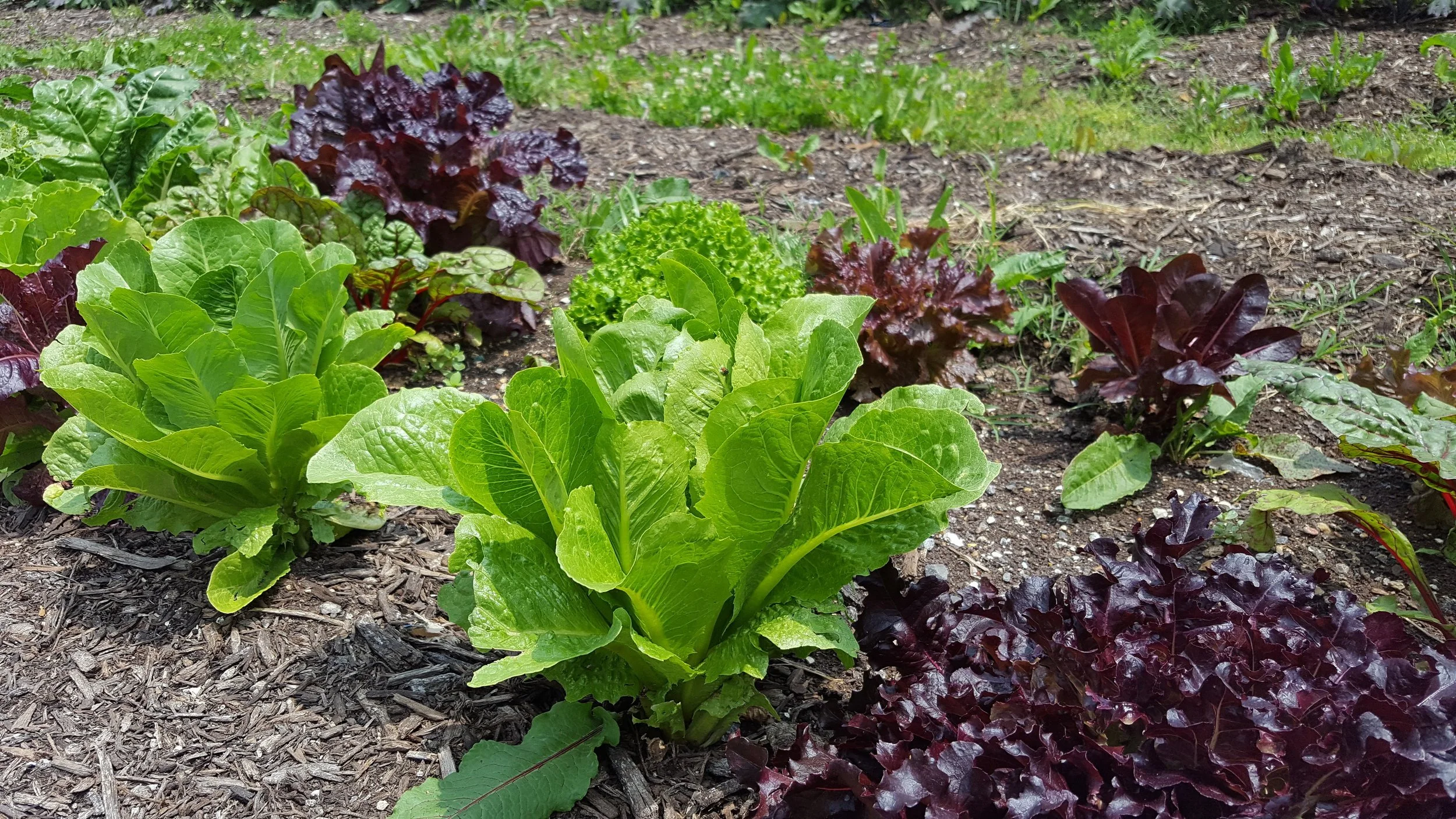
Corie Walker: we have some uh raised beds, which we try to encourage community members to pick from the raised beds to not only is it easier, it's also. Like, we plant surplus there for that reason.This all along here is wildflowers, which you want to have a lot of wildflowers for um, to, for pollination purposes and to encourage pests to migrate there, right, like be attracted to that side. It also attracts a lot of bugs that eat pests too. Those are our blackberry bushes. Those are all our greens, as you can see those are doing very well. This is our farmers Jeanette,
Kathleen Cutting: Hello!
Corie Walker: Who you may or may not know. But look at these baby carrots.
Kathleen Cutting: Wow
Kathleen Cutting: I see the bee boxes.
Corie Walker: Yea. We have some fruit trees, of course they're not. We have some fig trees, um, some peaches that grow, they look very bare in the winter, but in the summer they are very lush. Lots of blackberries.I love. It's really gorgeous in the summer. Just walking through like rows of tomatoes and picking those and the blackberries. Jeanette has expanded this big ground bed. When we get some numbers, we're establishing a data, our data dashboard right now to be able to like so I could literally quote to you, we got like over. One hundred and fifteen pounds this week out of the garden, but at this point, especially since we're not in like. Real growing season, I can't give you those numbers, but we do keep logs of everything that come for a gap, for gaps, certifications.
Oliver Hurst:What are the benefits from of no till agriculture?
Corie Walker: Its just better for the environment. Like when you're tilling, its causing a lot of emissions, like it's like not necessarily. And what happens over time is like, the topsoil becomes dryer, dryer and dryer and blows away. It's like the dust bowl. That was because so much of farmland had been blows due to natural due to natural disasters. But it's also also happened on the farmland because everybody was tilling and tilling and tilling until their land, until basically everything in the top blew away. Right? And then there was nothing um. Like, no nutrients left. Right, so like basically when you do no till you're not, you're not creating that agitation that. Um dries out the topsoil you're putting, you're putting nutrients back into the soil, and that's what sustainability is about. Instead of like taking, taking, taking from the land, you're giving something back so that it's not eventually dead. And then your land goes dormant and you have to leave it for a while, and that doesn't sound that bad unless there's people starving because you don't have proper land to, to fee people. Which is why aquaponics and all these other new technology for farming is going to be so important because our land. It is getting to a point where it's going to need to rest, especially on the commercial farming level.
Kathleen Cutting:To wrap up, Memphis Tilth is a social and environmental justice organization with a focus on food justice throughout the food system from farmers to consumers in the Mid-South. We hope this podcast allows for you to feel the passion these people have for their work and inspires hope for a more equitable food landscape. We thank everyone from the Tilth for their time in sharing their work and we thank all who listened for joining in on this conversation.